Researched guide, updated October 2026. Timetables and fares change, so confirm them with the operator before you book.
A two-week trip through Japan and South Korea works well as a single west-moving line. Fly into Tokyo, ride the Shinkansen to Kyoto and Fukuoka, cross the Korea Strait to Busan, take the KTX to Seoul, and fly home from there. The one real decision is how you get from Fukuoka to Busan. A ferry avoids two airports. A short flight is faster door to door. This guide covers both options, along with entry rules, packing and connectivity.
The short answer: the 14-day route and whether to take the ferry
Recommended split (14 days, 13 nights):
| Country | City | Nights | Main way in |
|---|---|---|---|
| Japan | Tokyo | 3 | International flight (Narita or Haneda) |
| Japan | Kyoto | 3 | Tokaido Shinkansen from Tokyo |
| Japan | Fukuoka | 3 | Sanyo Shinkansen from Kyoto to Hakata |
| South Korea | Busan | 2 | Ferry or flight from Fukuoka |
| South Korea | Seoul | 2 + departure day | KTX from Busan |
Fukuoka's third night is your buffer. Use it for a Dazaifu day trip if all goes to plan. If the weather disrupts the crossing, use it to rebook.
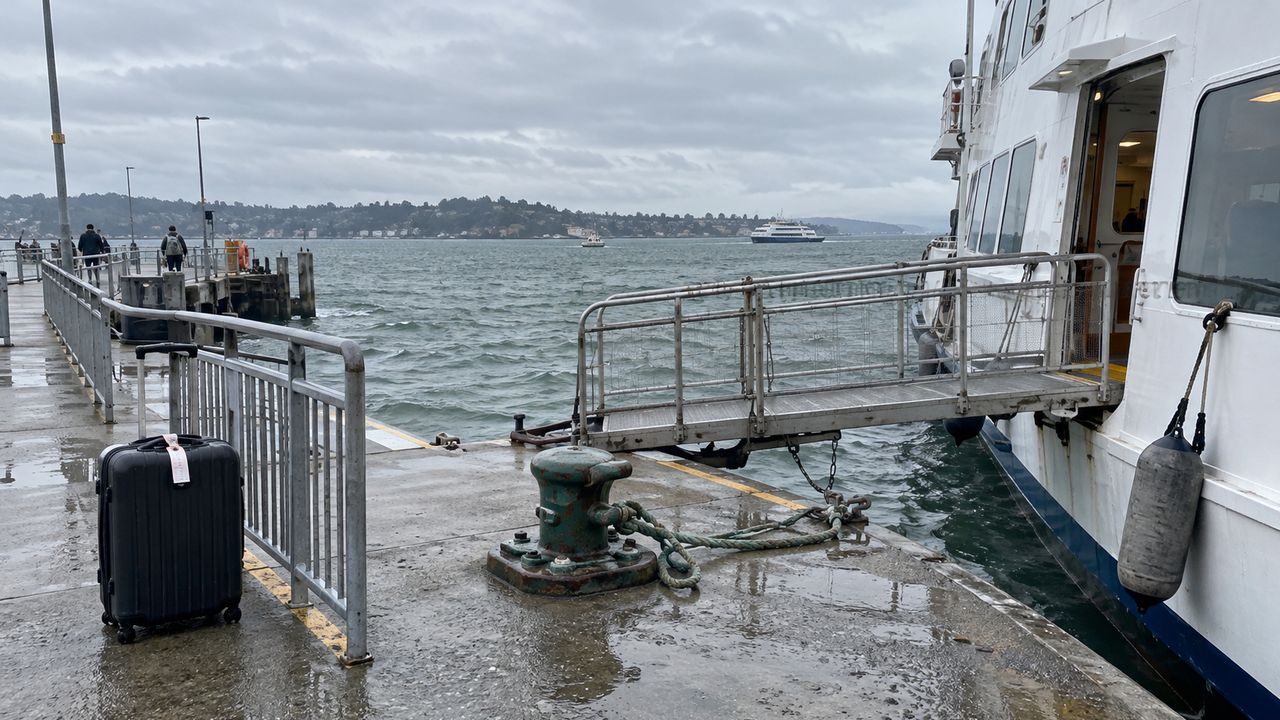
Ferry or flight? - Take the ferry if you want a slow, scenic crossing and like arriving next to Busan Station, a short walk from the KTX. Budget most of a day for it. The only operator I found for 2026 is Camellia Line. Booking-site listings for late October 2026 show the Hakata-to-Busan daytime sailing leaving at 12:30 and arriving at 18:30 (about 6 hours), on Wednesdays, Thursdays and Fridays. I could not reach the operator's own timetable, so confirm it on the Camellia Line website. Door to door, including check-in and immigration, expect most of a day. - Fly if time is tight, you are prone to seasickness, or you are travelling in winter, when sea cancellations are more likely. Fukuoka Airport is unusually close to the city centre, which makes the flight option especially quick on the Japan side.
Rail legs: Tokyo to Kyoto and Kyoto to Fukuoka are both best done by Shinkansen. Busan to Seoul is best done by KTX. It runs centre to centre and usually beats flying once you add airport transfers.
Route and day-by-day structure
| Day | Base | Suggested plan | Travel |
|---|---|---|---|
| 1 | Tokyo | Arrive, check in, evening in Shinjuku or Shibuya | Airport to city |
| 2 | Tokyo | Asakusa, Ueno, Akihabara or Harajuku and Meiji Jingu | Metro |
| 3 | Tokyo | Day trip: Nikko, Kamakura or Hakone | JR or private rail |
| 4 | Kyoto | Morning Shinkansen; afternoon in Higashiyama and Gion | Tokaido Shinkansen |
| 5 | Kyoto | Fushimi Inari early in the morning; Arashiyama afternoon | JR Nara Line, JR Sagano Line |
| 6 | Kyoto | Kinkaku-ji, Ryoan-ji, Nishiki Market; optional half-day in Nara | Bus or JR |
| 7 | Fukuoka | Morning Shinkansen; evening yatai (street stalls) in Nakasu | Sanyo Shinkansen |
| 8 | Fukuoka | Day trip to Dazaifu Tenmangu or the Itoshima coast | Nishitetsu rail or JR plus bus |
| 9 | Fukuoka | Buffer day: Ohori Park, Canal City, Hakata old town | — |
| 10 | Busan | Ferry or flight; evening at Gwangalli Beach | Ferry or flight |
| 11 | Busan | Gamcheon Culture Village, Jagalchi Market, Haeundae | Busan Metro |
| 12 | Seoul | Morning KTX; afternoon in Myeongdong or Insadong | KTX |
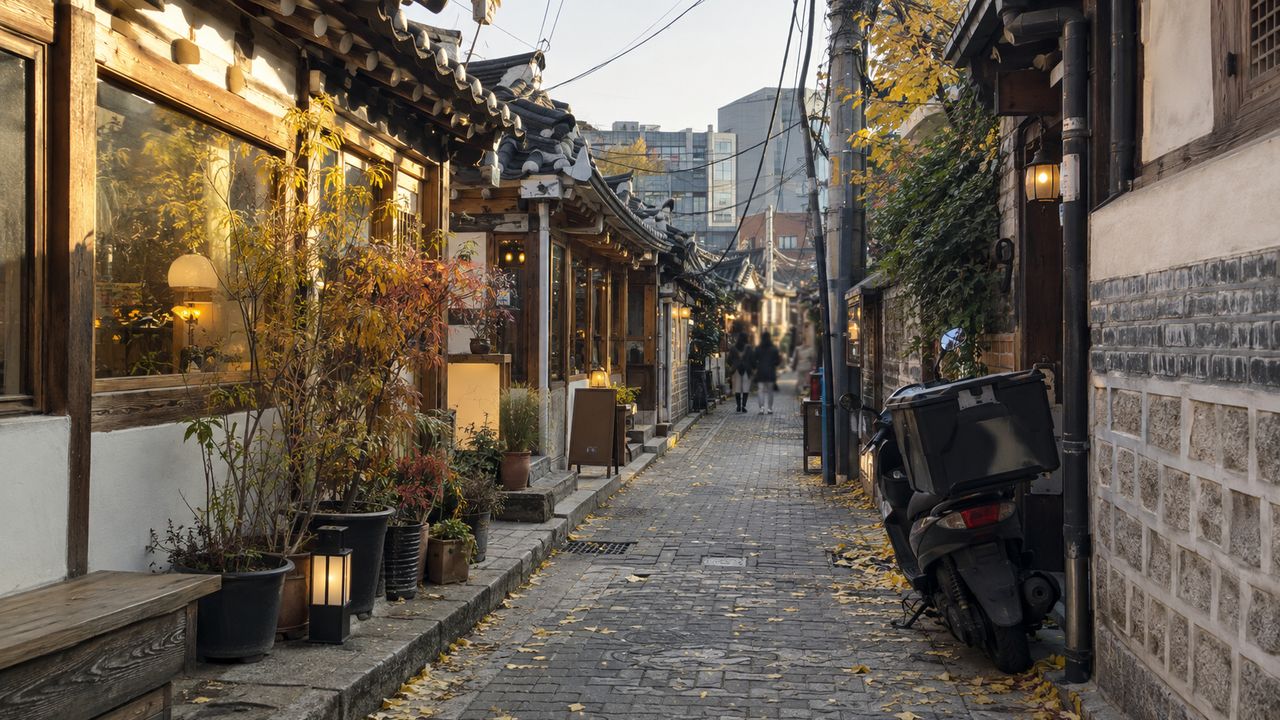
| 13 | Seoul | Gyeongbokgung, Bukchon Hanok Village, Ikseon-dong | Seoul Metro |
| 14 | Seoul | Last morning, then airport | AREX to Incheon or metro to Gimpo |
Plan around the crossing. The ferry's direction and departure time shape days 9 and 10. - On the Japan side, you need to reach the Hakata Port International Terminal before check-in closes. That terminal is separate from Hakata Station. Check the transfer time (bus or taxi) when you book. One traveller report has Hakata check-in opening at 10:30, with immigration opening around 11:15, for a 12:30 departure, so allow for that. - On the Korea side, the Busan Port International Passenger Terminal sits close to Busan Station. If you arrive in the evening, staying near the station or Nampo-dong saves a cross-city trip with luggage. - According to booking-site listings, the Camellia Line sails Hakata to Busan in the daytime. The Busan-to-Hakata direction is the overnight one, reportedly arriving around 07:30 the next morning. Aggregators disagree on its departure: one lists 20:00 and another lists check-in 16:30–18:30, boarding complete 20:00 and departure 22:30. The 20:00 figure looks like the boarding deadline, but confirm it with the operator. One third-party guide says Busan check-in closes at 18:30. The ferry does not run every day. Aggregators show roughly 5 sailings a week, so check that a sailing falls on your chosen date. If you specifically want the overnight experience, you may need to reverse the whole route and start in Seoul.
Ticketing tip: an "open-jaw" ticket (into Tokyo, out of Seoul) is usually simpler than returning to Tokyo. Compare it against two one-way fares.
Ferry versus flight: comparison table
High-speed jetfoil service on this route is gone. JR Kyushu's Queen Beetle was suspended in August 2024 and the service was then terminated. I found no other Hakata–Busan high-speed service for 2026. Camellia Line's New Camellia, a conventional car-and-passenger ferry, is the sea option listed by booking sites. Confirm the vessel and schedule on the Camellia Line website.
Fukuoka to Busan: ferry vs flight (confirm 2026 details with operators)
| Factor | Ferry (Camellia Line) | Direct flight |
|---|---|---|
| Operators | Camellia Line (the only operator listed on booking sites) | Check which airlines currently fly this route direct, and their schedules |
| Departure point | Hakata Port International Terminal | Fukuoka Airport, international terminal |
| Arrival point | Busan Port International Passenger Terminal | Gimhae International Airport |
| Crossing / flight time | About 6 hrs westbound (12:30 to 18:30 per a booking-site listing); the overnight eastbound sailing reportedly takes roughly 9 hrs; confirm | About an hour |
| Frequency | Not daily; roughly 5 sailings a week per aggregators | Check airline schedules |
| Fare classes | Check the operator for class names and fares | Economy; fare depends on carrier and baggage bundle |
| Typical fare | Check the operator; surcharges and port fees may apply | Check carriers; fares vary widely by date |
| Luggage allowance | Check the operator | Varies by carrier; low-cost fares may exclude checked bags |
| Check-in cutoff | Third-party reports put Busan check-in closing at 18:30 for the evening sailing; confirm for your direction | Usually 40–60 min before departure; arrive ~2 hrs ahead |
| Booking window | Check the operator | Typically months ahead |
| Weather risk | Higher; sailings can be cancelled in strong wind or swell | Lower, though not zero |
Door-to-door time (city centre to city centre), rough estimate
| Step | Ferry | Flight |
|---|---|---|
| City centre to departure point | Hakata Station to port by bus or taxi | Hakata Station to Fukuoka Airport by subway, a short ride |
| Pre-departure buffer | Ferry check-in window plus queue | ~2 hours |
| Crossing | About 6 hrs (daytime westbound) | About an hour |
| Arrival immigration and customs | Variable | Variable |
| Arrival point to central Busan | Busan Station is close to the port terminal | Gimhae to Seomyeon or Busan Station by light rail and metro |
| Rough total | Most of a day | A few hours, roughly half the ferry's total |
Sea conditions. The Korea Strait can get choppy. A large conventional ferry is generally steadier than a small high-speed craft. Even so, if you get seasick, take a remedy before boarding. Winter brings strong northwesterly winds and a higher chance of cancellation. Camellia Line posts operating notices on its website (for example, a typhoon notice in August 2026 said any changes or cancellations would be posted there). I could not find a stated notice period. One traveller reported a winter sailing cancelled with only same-day notice, so do not assume you will get days of warning. That is why the Fukuoka buffer day matters.
Bottom line: the ferry gives you a distinctive arrival at Busan's central port and avoids two airport transfers, but it costs most of a day. The flight costs a few hours. Pick the ferry only if the crossing itself appeals to you.
Entry requirements for Japan and South Korea
You go through two completely separate entries. On the ferry, immigration happens at the port terminals: you exit Japan at Hakata Port and enter Korea at Busan Port. Rules depend on your passport. Verify everything below on official sites shortly before you travel.
| Requirement | Japan (2026) | South Korea (2026) |
|---|---|---|
| Visa-free entry | Available for many nationalities; check the Ministry of Foreign Affairs of Japan exemption list for yours | Available for many nationalities; check the Ministry of Foreign Affairs of Korea visa-waiver list for yours |
| Typical permitted stay | Depends on nationality; check MOFA | Varies by nationality; check MOFA Korea |
| Pre-travel authorisation | None that I found in effect for short-term visitors in 2026. Japan plans an electronic travel authorisation (JESTA), expected to launch in fiscal year 2028 | K-ETA is required for many visa-exempt nationalities. Korea's Ministry of Foreign Affairs notice (dated 30 Dec 2025) says a set of countries is temporarily exempt until 31 December 2026, which covers this trip. Secondary sources count 22 countries; I could not confirm the exact list, so check your nationality on the official K-ETA portal |
| Arrival forms | Visit Japan Web (online immigration and customs) is a convenience tool; I could not verify its current status, so check it | Reportedly, since 1 January 2026 all foreign nationals must submit an e-Arrival Card in the 3 days before arrival, with limited exceptions. I could not confirm how this applies at seaports, so check before sailing |
| Passport validity | Check MOFA Japan for your nationality | Check MOFA Korea for your nationality |
| Onward ticket | May be requested | May be requested |
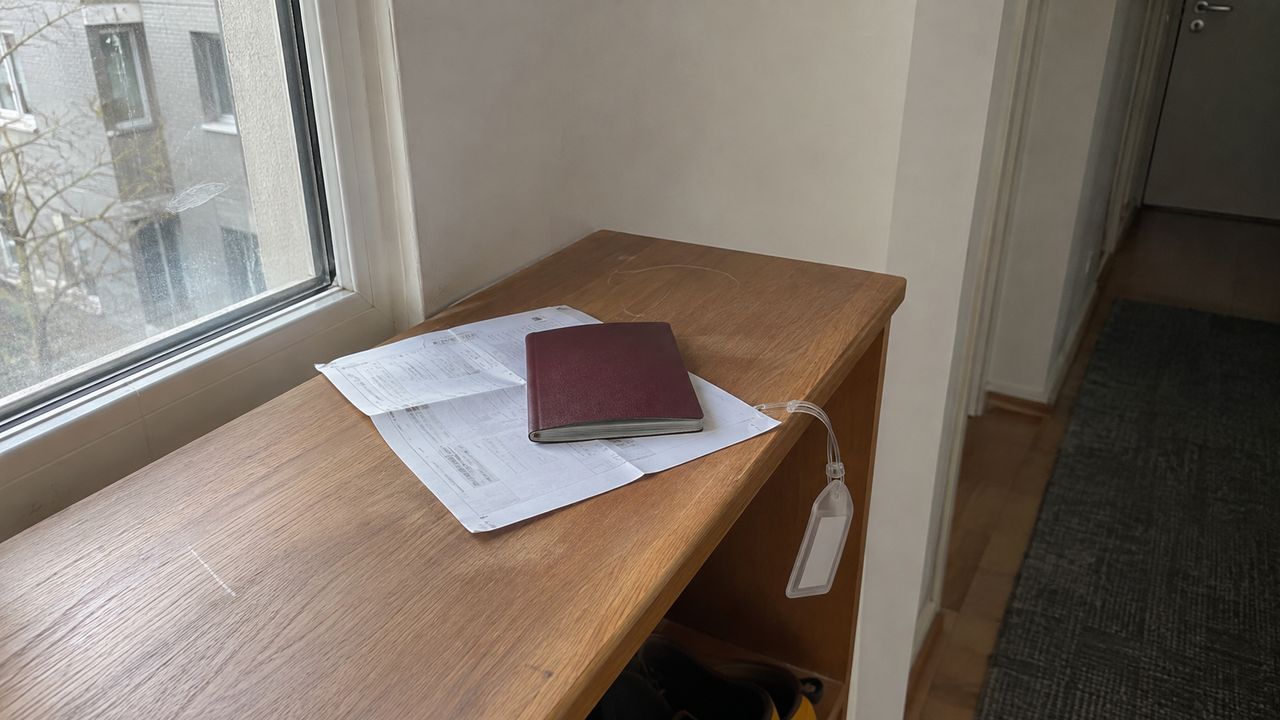
Practical notes - Many airlines and ferry operators apply their own passport validity rules, which can be stricter than the country's. Many travellers keep six months of validity from their entry date as a cautious buffer. Confirm the actual requirement with your airline, the ferry operator and the official sites below. - If you need a K-ETA, apply well before departure and keep the approval confirmation. I could not confirm whether the ferry operator checks it at check-in, so ask the operator. - Carry proof of your onward flight from Seoul. It answers the "onward travel" question at both borders. - Official sources: - Japan: Ministry of Foreign Affairs of Japan (mofa.go.jp) and the Immigration Services Agency (moj.go.jp/isa). - Korea: Ministry of Foreign Affairs (mofa.go.kr) and the official K-ETA portal (k-eta.go.kr). Use only the official portal; lookalike sites charge extra fees.
Packing list for a Japan-Korea trip in autumn or spring
Autumn (late October to November) and spring (late March to April) are generally comfortable seasons for this route. Kyoto's autumn leaves and the spring cherry blossoms vary by city and year, so check current forecasts close to your dates. Daytime is usually mild and mornings are cool, especially on the water.
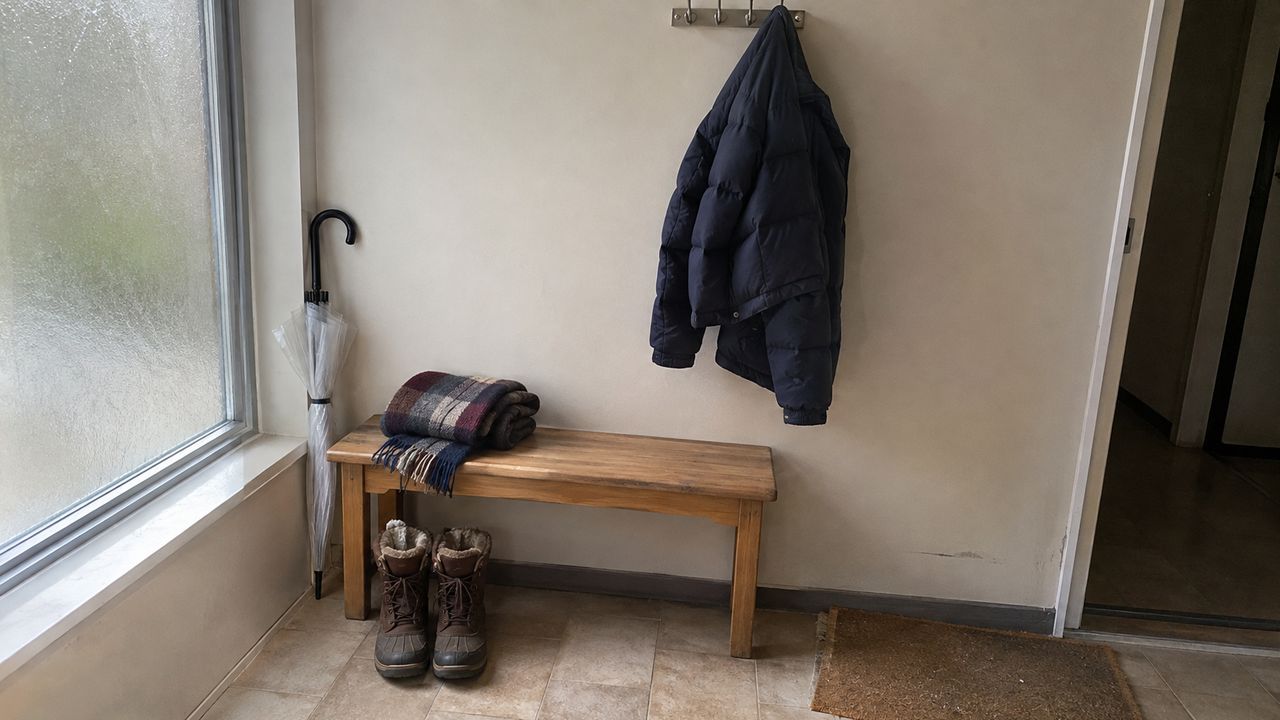
Clothing - Layers: a T-shirt, a light knit, and a packable jacket. Temperatures can swing noticeably between morning and afternoon. - Comfortable, broken-in walking shoes. Fushimi Inari, Gamcheon Village and Bukchon involve steep slopes and many steps. - Shoes that slip on and off easily. Many temples, ryokan and some restaurants ask you to remove them. - Socks without holes, for the same reason.
Gear - Universal plug adapter. Check the socket types and voltage for each country before you go (Japan commonly uses Type A/B at 100 V, Korea commonly uses Type C/F at 220 V). - Most phone and laptop chargers handle both voltages. Check hair tools. - Power bank. Carry it in your hand luggage on flights. - Compact daypack or crossbody bag. - A small bag for your rubbish. Public bins are scarce in Japan.
Money - Cards are widely accepted in Tokyo, Seoul and Busan. Korea in particular is very card-friendly. - Carry some yen for small shops, shrine offerings, some temple entry fees and Fukuoka's yatai. - Transit cards save time: a Suica/PASMO or ICOCA in Japan (mobile versions work on many phones) and T-money in Korea. Check whether physical cards are currently available to visitors.
Ferry-specific items - Motion-sickness tablets or bands. - A light windproof jacket for the deck. - Snacks and water. Onboard options may be limited and priced in one currency. One traveller reported no restaurants open during the daytime crossing, so bring food. - A small amount of won for arrival, although cards work at Busan Station.
eSIM and connectivity across both countries
Short version: a single regional eSIM covering Japan and Korea is the simplest option, but only buy one if the provider explicitly lists both countries in its coverage.
| Option | Pros | Cons |
|---|---|---|
| One regional eSIM (Japan + Korea) | One install, no swap at the border | May cost more per GB; check which local networks it uses |
| Two country eSIMs | Often better value; local network quality | Two installs; switch on the ferry or plane |
| Pocket Wi-Fi | Shared by a group | One more device to charge and return; pickup and return in different countries can be awkward |
| Physical local SIM | May include a local number | Registration and identity rules apply; check current requirements, especially for Korean voice SIMs |
What to compare - Total data, not just "unlimited". Many plans slow down after a daily or total cap. - Validity period. A 14-day trip needs at least 14 days, or two plans of 9 and 5 days. - Whether hotspot/tethering is allowed. - Whether the plan is data-only. Check the provider's terms and Korea's current SIM registration rules for foreign visitors.
Setup tips - Install the eSIM at home over Wi-Fi. - Turn on data roaming for that line only when you land. - Download offline maps before you go. For Korea, use Naver Map or KakaoMap rather than Google Maps for walking and driving directions, which are limited in Korea. - Keep screenshots of ferry tickets, hotel addresses and your K-ETA approval (if you need one) in case you lose signal at sea.
Compare Japan and Korea eSIM plans here:
Budget and booking tips
Main transport legs (check current fares and times with each operator)
| Leg | Mode | Where to check fare and time |
|---|---|---|
| Tokyo → Kyoto | Nozomi Shinkansen | JR Central |
| Kyoto → Hakata (Fukuoka) | Nozomi Shinkansen, direct | JR West |
| Fukuoka → Busan | Ferry or flight | See comparison table |
| Busan → Seoul | KTX | Korail |
| Fukuoka Airport → Hakata Station | Subway | Short ride; check the city subway fare |
| Gimhae Airport → central Busan | Light rail + metro | Check Busan transit fares and times |
| Seoul Station → Incheon Airport | AREX Express | Check the AREX fare and time |
Booking advice - Shinkansen: book reserved seats ahead for travel during cherry-blossom season, Golden Week, Obon or autumn weekends. Large suitcases may need an oversized-baggage seat reservation on the Tokaido–Sanyo line, so check the current size rules with JR. - Japan Rail Pass: for a simple Tokyo → Kyoto → Fukuoka line, separate tickets may cost less than the nationwide pass. Compare the current pass price with your actual point-to-point fares before buying. The pass does not cover the ferry or anything in Korea. - KTX: book through Korail's official site or app. Weekend and holiday trains between Busan and Seoul fill up. - Passes and city tickets: buy a pass only where it genuinely beats paying as you go, such as an airport express ticket or a regional pass that matches your day trips. You can compare passes and city attraction tickets on
Pre-booking checklist (October 2026) 1. Confirm on the Camellia Line website that a sailing runs on your date, plus its direction, departure time and fare. 2. Check your nationality's visa-free stay, K-ETA status and e-Arrival Card requirement for Korea, and the entry rules for Japan. 3. Decide ferry vs flight. Book the Fukuoka buffer night either way. 4. Book the Shinkansen legs and KTX once the dates are fixed. 5. Install an eSIM that covers both countries, or two separate plans.
Timetables and fares change regularly. Treat this guide as a planning framework, and confirm each figure with the operator before paying.
FAQ
Is the Fukuoka to Busan ferry running in 2026?
Camellia Line is the only operator listed on booking sites for this route in 2026, with roughly five sailings a week. Schedules and directions vary, so confirm a sailing on your date on the Camellia Line website before booking.
Do I need a K-ETA to visit South Korea in 2026?
Many visa-exempt nationalities need a K-ETA. Korea's Ministry of Foreign Affairs notice says some countries are temporarily exempt until 31 December 2026, but the exact list could not be confirmed, so check your nationality on the official K-ETA portal.
Is a Japan Rail Pass worth it for Tokyo, Kyoto and Fukuoka?
Usually not for this simple line. Separate Shinkansen tickets may cost less than the pass, so compare the current pass price with your point-to-point fares before buying. The pass does not cover the ferry or Korea.