Short answer: The fastest way from Seoul to Jeonju is usually the KTX high-speed train to Jeonju Station, which takes roughly two hours or a little less. The cheapest option is usually an express bus, which takes roughly three hours. In winter, start early, see the village in daylight, and book your return well before the last service.
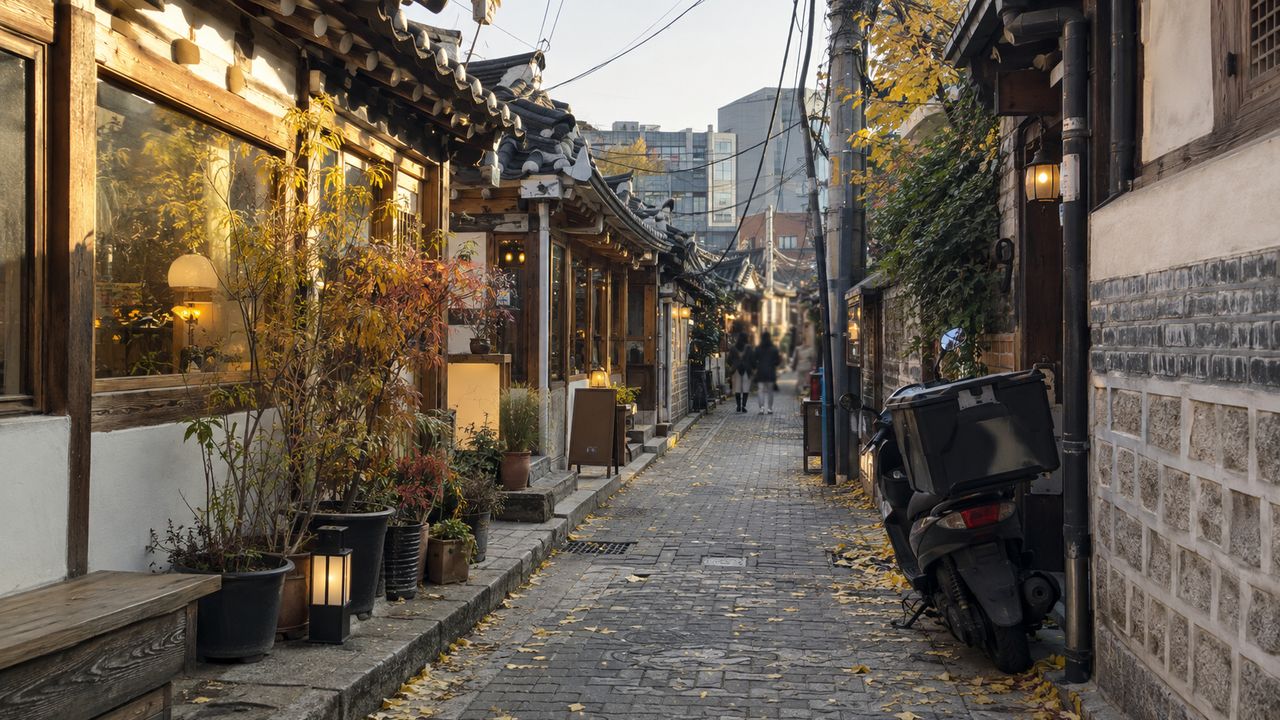
Jeonju Hanok Village is a neighborhood where people live, not a theme park. Keep your voice down, don't photograph residents or into homes, and leave the residential lanes before late evening.
Times, fares and opening hours change by season. None of the figures below could be checked against official sources, so treat them as approximate and confirm them with the operator or site before you travel.
Quick answer: the fastest way from Seoul to Jeonju in winter
These are your realistic options:
- KTX. Book to Jeonju Station. You may see Jeonju Hyanggyo, the historic Confucian school inside the Hanok Village, on maps or in search results. It is a sightseeing stop, not the station you book. KTX services on this route usually leave from Yongsan Station in Seoul. Not every service starts there, so check Korail for your date.
- SRT. SRT is not the simplest way to reach Jeonju. Check the SRT site for current routes and any transfer needed. For most visitors, the KTX from Yongsan is easier.
- Express bus. Buses run from Seoul Express Bus Terminal (also called Central City Terminal) to the Jeonju express bus terminal. They are slower but usually cheaper, and they run often during the day.
| Option | Journey time (approx.) | Fare | Frequency | How to book |
|---|---|---|---|---|
| KTX, Yongsan → Jeonju | roughly 1 hr 40 min to 2 hr | Check Korail for the current fare | Check Korail for your date | Korail website or Korail Talk app |
| Express bus, Seoul Express Bus Terminal → Jeonju | roughly 2 hr 45 min to 3 hr, longer in traffic or snow | Check Kobus or the terminal | Frequent in the day; check the timetable | Express bus websites/apps (e.g. Kobus) or at the terminal |
Day-trip recommendation: take a train or bus that leaves Seoul by about 8:00, and aim to be walking the lanes by late morning. Book a return that leaves Jeonju at least one to two hours before the last service of the day. In winter, snow can slow the roads and trains on holiday weekends sell out, so a buffer matters more than usual.
Transport: Seoul to Jeonju
| Operator | Origin | Destination | Journey time (approx.) | Booking channel |
|---|---|---|---|---|
| Korail KTX | Yongsan | Jeonju Station | roughly 1 hr 40 min to 2 hr | Korail website, Korail Talk app, station counters |
| Korail KTX (return) | Jeonju Station | Yongsan | Similar | As above |
| Express bus | Seoul Express Bus Terminal | Jeonju Express Bus Terminal | roughly 2 hr 45 min to 3 hr | Kobus / bus apps, terminal counters |
| Express bus (return) | Jeonju Express Bus Terminal | Seoul Express Bus Terminal | Similar | As above |
First and last departures vary by day and season. Look up the timetable for your exact date on the Korail and Kobus sites, and don't rely on a remembered time for the last service.
Winter and holiday schedules:
- Winter timetables can differ from the standard timetable.
- Schedules change around Seollal (Lunar New Year). Check the exact Seollal date and the surrounding public holidays for your year of travel. Expect sold-out trains, heavy road traffic and extra or changed services in the days around it.
- Korail and the bus operators publish holiday timetables and booking-open dates in advance. Check them before you fix your plans.
- Check the refund and change rules for your ticket type before you buy. They differ between rail and bus.
Booking tips:
- Korail offers English-language booking online. Check how far ahead tickets go on sale for your date.
- If you'd rather pay in your home currency or are buying a rail pass, KTX tickets and Korail Passes can also be booked through Check pricesKlook →Some links may be affiliate links. Disclosure. Compare the price with Korail's own site first.
From Jeonju Station or the bus terminal to Hanok Village
| Option | Details | Approx. time | Approx. cost |
|---|---|---|---|
| City bus from Jeonju Station | Several routes serve the village area near Jeondong Cathedral. Route numbers differ between sources, so look up the current route in Naver or Kakao Map | about 20–25 min | Check the current city bus fare |
| City bus from express bus terminal | Route numbers differ between sources. Look up the current route in Naver or Kakao Map | about 20–25 min | Check the current fare |
| Taxi from Jeonju Station | Ask for "Jeonju Hanok Maeul" or Jeondong Cathedral | short ride | Metered; current tariff not confirmed |
| Taxi from express bus terminal | Same drop-off points | short ride | Metered; current tariff not confirmed |
Naver Map and Kakao Map give the most reliable live bus routes in Korea, while Google Maps has limited transit data there. Mobile data makes the local leg much easier; an
Hanok Village is a neighborhood where people live
Jeonju Hanok Village is a large cluster of traditional Korean houses (hanok) in central Jeonju. It has tiled roofs, wooden frames, courtyards and narrow lanes. Around them are shops, cafés, restaurants and guesthouses, plus historic sites such as Gyeonggijeon Shrine and Jeondong Cathedral.
Many of the houses are private homes. Others are family-run businesses where the owners also live. Residents go to work and school, take out rubbish, hang laundry and come home late, like in any other neighborhood. The main streets are busy and commercial, but one lane back you are often on someone's doorstep.
Many visitors treat the area as an outdoor set, especially those in rented hanbok for photos. The result is noise, crowding at gates and photos taken into private spaces, and residents feel it. That's the reason for the etiquette below.
No current, dated etiquette guidance from Jeonju City or the village management could be confirmed for this guide. Posted signs take priority over the general advice here.
Etiquette in a residential area
These guidelines apply whether you are there for two hours or two nights:
- Keep your voice low. In the narrow side lanes, sound carries straight over walls and into rooms. Talk quietly, don't play music from speakers, and save group conversations for the main streets.
- Don't photograph residents. Older residents sitting outside, children and people going about their day are not part of the scenery. Leave them out of your photos as a basic courtesy.
- Don't photograph into homes. That includes shooting through open gates, doorways, gaps in fences or windows, even if the courtyard looks beautiful.
- Ask before close-ups of people working. Shopkeepers, craftspeople and food vendors may be happy to be photographed. Ask first, and accept a no.
- Avoid the residential lanes in the late evening. Plan to be back on the main streets, at your accommodation or on your way out by then. Official quiet hours for the village could not be confirmed, so don't assume a set time. Treat the lanes after dark the way you would treat your own street at night.
- Stay out of gardens, courtyards and private property. An open gate is not an invitation. Signs saying 사유지 (private property) or 출입금지 (no entry) mean exactly that.
- Take your rubbish with you. Public bins can be scarce. Don't leave cups, bags or food on walls, steps or doorsteps, and don't sit on residents' steps to eat.
Staying overnight in a hanok: noise and heating in winter
How ondol heating works
Traditional hanok are heated by ondol, a system that warms the floor from below. Historically it used flues from a wood fire. Many guesthouses today use heated floors, but the setup varies by property, so ask your host whether a room uses floor heating, electric heaters or both.
In winter this usually means:
- The floor gets warm, but the air can stay cool, especially near traditional paper-covered (hanji) doors and windows.
- Rooms can take a while to warm up after check-in, particularly if the heating was off.
- You usually sleep on a mattress (yo) on the heated floor, which many guests find cozy once the room is warm.
Before you book
Ask the host, or read the listing carefully, about:
- How the heating is controlled and whether you can adjust it yourself
- Whether extra blankets or a heated mat are provided
- Whether windows and doors are insulated or double-layered
- Whether rooms are private or open onto a shared courtyard
- Whether the bathroom is private or shared, and how far it is from the room in the cold
Noise
Hanok walls and paper doors are thin, and courtyards are often shared. You will hear other guests, and they will hear you. Early departures, late arrivals and suitcase wheels on stone all carry. Keep your voice down after dark, for other guests and for the residents next door.
To compare options,
Read the house rules before booking. Check check-in and check-out times, any quiet hours set by the host, and rules on shoes, cooking and the courtyard.
Practical winter tips for a day or overnight visit
- Dress for cold. Winters in Jeonju are cold, especially in the morning and at night. Check the Korea Meteorological Administration forecast before you go. Wear layers, gloves and a hat, and choose shoes that grip, since stone paths and wooden steps can be icy.
- Plan around daylight. Sunset comes early in December and January, and some side lanes may have limited lighting after dusk. Plan your walk for daylight hours.
- Check opening hours, admission and closing days for your exact date. Hours often run shorter in winter, and none could be confirmed for this guide. Look up each site you plan to visit:
- Gyeonggijeon Shrine. Check winter hours, last entry, admission and any weekly closing day.
- Omokdae. This hilltop pavilion has views over the rooftops. Check access hours.
- Jeondong Cathedral. This is an active church and is closed to sightseers during services.
- Jeonju Hyanggyo. Check winter hours.
- Hanok Experience Center. Check hours and any programs on your date.
- Expect some closures. Some sites close on a set weekday or during public holidays such as Seollal. Inside Jeondong Cathedral, be quiet, and stay out during services.
- Have mobile data. You'll want it for live bus times and timetable checks on the day.
Sample one-day and overnight itineraries
These are suggested plans. Recheck the timetables for your date before following them.
One-day trip from Seoul
| Time | Plan |
|---|---|
| ~07:30–08:30 | Early KTX from Yongsan or express bus from Seoul Express Bus Terminal |
| ~10:00–11:00 | Arrive in Jeonju, then bus or taxi to the village |
| Late morning | Gyeonggijeon Shrine and Jeondong Cathedral while the light is good |
| Lunch | Main street. Jeonju is known for bibimbap and kongnamul gukbap (bean sprout soup), a good choice in cold weather |
| Early afternoon | Walk the lanes quietly, then climb to Omokdae for a view over the rooftops |
| Mid-afternoon | Café break, small shops |
| Before dusk | Head back to the station or terminal |
| Return | A train or bus leaving at least 1–2 hours before the last service, booked in advance |
Overnight trip
- Day 1: Arrive by early afternoon so you can check in and see the lanes in daylight. Ask the host to show you the heating before you go out. Walk the village before dark, then have dinner on the main streets. After dark, keep your voice down on the way back to your guesthouse and avoid the residential lanes.
- Day 2: Enjoy the village early, when it's quieter, but keep your voice low near homes as residents start their day. Visit any sites you missed. Check out on time, and pack quietly if you're leaving early. Book a return with a comfortable buffer, especially on weekends or near holidays.
Final checklist before you go
- [ ] Confirm the winter timetable for your train or bus on the official Korail or express bus site. Check holiday schedules if you're traveling near Seollal.
- [ ] Book your return ticket in advance and note the last service of the day.
- [ ] Check opening hours, closing days and admission for each site on your planned date.
- [ ] Read your host's house rules on heating, noise, check-in and check-out.
- [ ] Carry both cash and a card, plus a transit card if you have one. Acceptance can vary between shops, buses and taxis.
- [ ] Check for any local notices or advisories for Jeonju during your travel dates.
- [ ] Pack warm layers, gloves and shoes with grip.
- [ ] Remember the main rule: quiet voices, no photos of residents or into homes, and out of the residential lanes before late evening.
FAQ
What is the fastest way from Seoul to Jeonju?
The KTX high-speed train is usually fastest, taking roughly 1 hour 40 minutes to 2 hours to Jeonju Station, usually from Yongsan Station in Seoul. Check Korail for the current timetable and fare for your date, as these are approximate.
Can I photograph people and houses in Jeonju Hanok Village?
Don't photograph residents, and don't photograph into homes, through gates, doorways or windows. Ask before taking close-ups of shopkeepers or vendors and accept a no. Posted signs such as 사유지 (private property) or 출입금지 (no entry) take priority.
Should I stay out of the residential lanes at night?
Yes. Avoid the residential lanes in the late evening, keep your voice low when passing homes, and stay on the main streets after dark. Official quiet hours could not be confirmed for this guide, so treat late evening as the cutoff.